Inventory
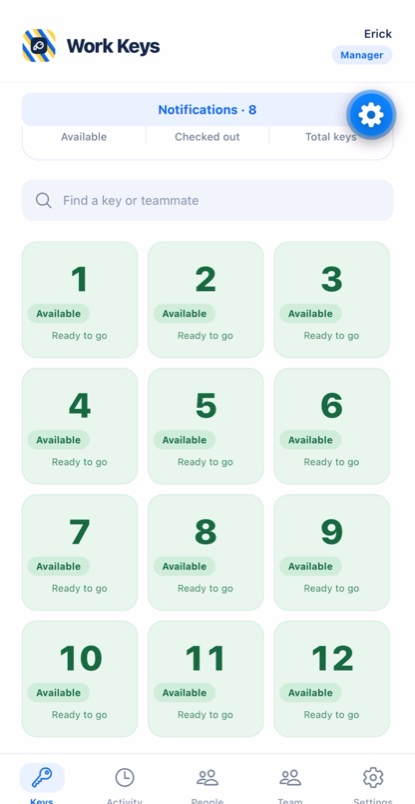
Manager view starts with status.
Available, checked out, total keys, notifications, search, and bottom navigation make the system scannable.
The old key process depended on paper. When multiple keys were checked out, managers had no live custody state, no return proof, and no clean way to explain which handoff failed. This is the problem KeyAudit fixes.

I rebuilt the workflow as a small custody system: every key gets a state, every return gets a manager confirmation, and every exception can be reviewed later.
My fix makes physical keys behave more like tracked access assets. A key can be assigned, requested back, verified by a manager, overridden when needed, and exported into an audit record.
For cyber and operations people, the interesting part is not that it looks clean. It is that the interface reduces ambiguity in a physical access workflow where informal handoffs usually become the weak point.
KeyAudit makes possession, return request, manager confirmation, and final status separate events.
The holder can initiate return, but the manager closes the loop after receiving the physical key.
Manager override exists as an explicit operational path instead of a hidden backdoor in the process.
Returned, override, pending, duration, and timestamps become reviewable outside the phone.
These screens show the full loop: inventory, active custody, one-time code, manager verification, confirmation, and export. The Apple recording/status chrome has been cropped away so the workflow is the focus.
Available, checked out, total keys, notifications, search, and bottom navigation make the system scannable.
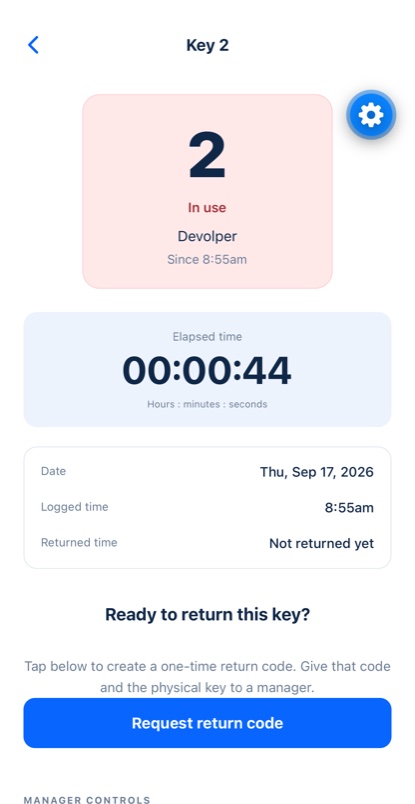
The app records who has the key, when it left, how long it has been out, and what action comes next.
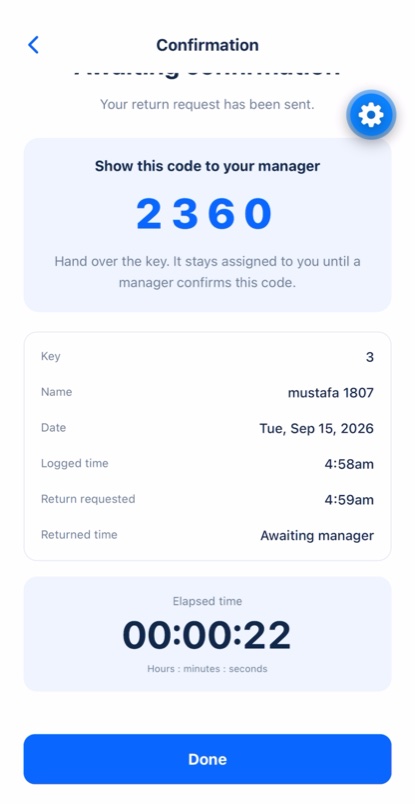
The user requests return, receives a one-time code, and remains assigned until the manager confirms receipt.
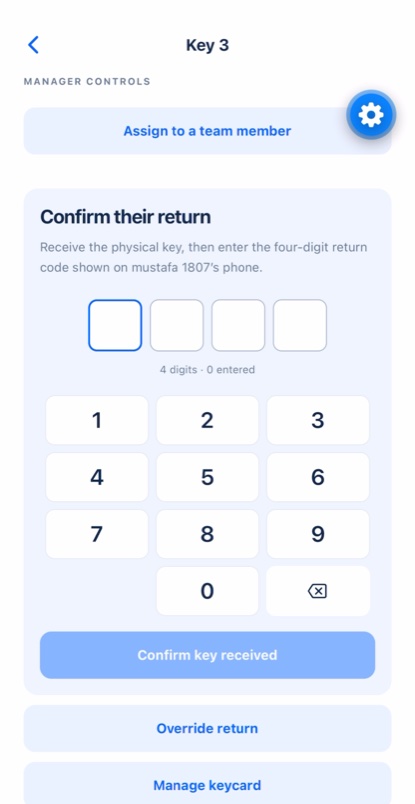
The manager receives the physical key, enters the four-digit code, and turns the pending return into a confirmed record.
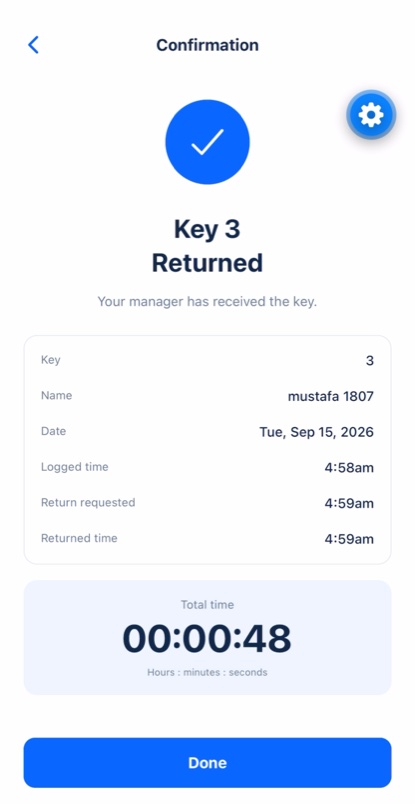
Key number, holder, date, logged time, return request, returned time, and total duration are presented together.
A cyber-minded reviewer should be able to ask: who had the asset, what state was it in, what exception path happened, and what evidence can be retained? KeyAudit answers those questions without requiring a manager to reconstruct the shift from memory.

The progress is visible in the workflow itself: the app moved from capturing names and keys to modeling custody as a sequence of events with proof, roles, and recoverable exceptions.
A manual sheet defined the basic need: name, key number, sign-out, sign-in, and key check.
The keys became cards with searchable availability, status filters, and manager visibility.
The handoff became a two-party loop: request return, show code, receive key, confirm code.
The system now records duration, return state, override status, retention, and printable activity logs.
KeyAudit is small on purpose. It does not try to be a full identity platform. It takes one risky physical workflow and gives it the controls people expect from serious systems.